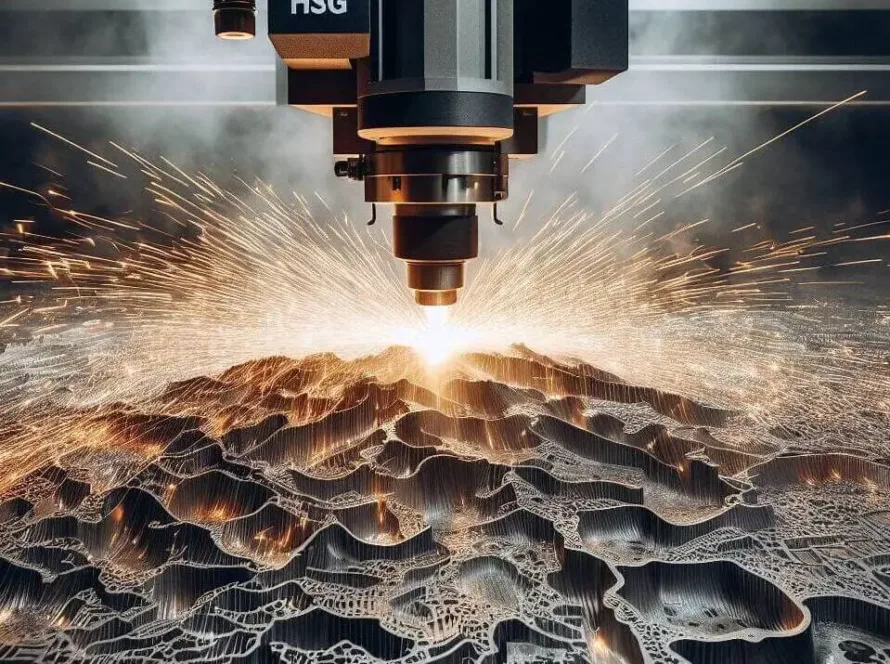
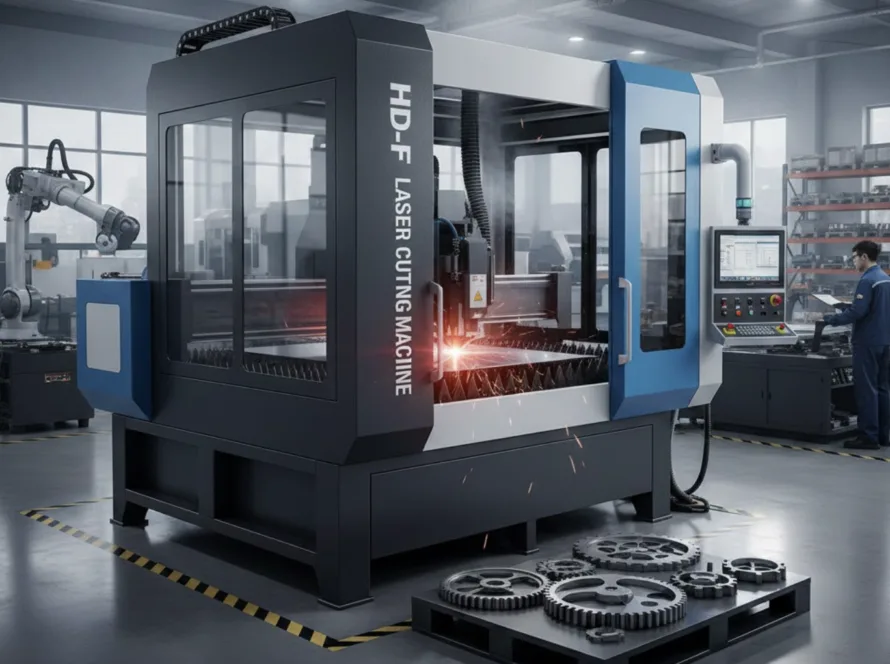
In today's industry, faster, more flexible, and more precise production lines are one of the most important factors directly determining a company's competitive strength. At this point, laser technologies, especially profile laser cutting solutions, have become central to modern production. This technology, which enables high-precision processing of materials with different geometric cross-sections such as pipes, box profiles, ellipses, ovals, and others, has become standard in industrial production.
The main reason laser cutting systems are so popular is that they offer both high precision and high speed. Traditional cutting methods often have disadvantages such as deformation caused by heat, surface irregularities, burr formation, and the need for additional labor. Laser cutting, on the other hand, minimizes the effects of heat and prepares the cut surface for assembly without requiring additional processing. This feature reduces production costs and allows for a more efficient workflow.
Additionally, laser cutting technologies provide businesses with design freedom. Complex geometries, holes with millimeter precision, connection points, and special shapes can be effortlessly produced in a CNC-controlled system. This offers flexibility in product development processes and enables the creation of more innovative products.
This comprehensive guide details what profile laser cutting is, how it works, the benefits that choosing the right machine can bring to a business, and the industries where laser cutting is heavily used. Throughout the content, it outlines step by step why this technology is a strategic investment for businesses looking to optimize their production processes.
What is Profile Laser Cutting?
Profile laser cutting is an advanced manufacturing method that enables the precise cutting of metal materials in pipe and profile structures using a high-intensity laser beam. This method combines the power of fiber laser technology with a CNC-controlled system, allowing both standard and custom-geometry profiles to be processed with millimeter accuracy. All profile types, such as square, rectangular, round, oval, and elliptical, can be cut seamlessly using this technology.
The main advantage of this method is that the laser beam performs the process without contacting the material. Thanks to the non-contact process, no deformation occurs in the cutting area due to physical impact, the material structure is not damaged, and surface quality is preserved. Furthermore, the laser's focused energy creates minimal heat input in the cut area (HAZ – Heat Affected Zone). This eliminates problems commonly seen in traditional methods, such as warping, bending, discoloration, or cracking.
Profile laser cutting is an ideal solution not only for straight cuts, but also for drilling holes, chamfering, creating connection channels, notching, marking, and performing multiple operations on the same workpiece in a single pass. In this way, it simplifies the production process, reduces labor errors, and provides high flexibility in product development processes.
Repeatability is a critical issue, especially for businesses engaged in mass production. Profile laser cutting technology, thanks to its CNC-based control system, enables the same part to be produced hundreds or thousands of times with the same precision. This reduces alignment issues during assembly, improves product compatibility, and maintains consistent production quality.
How Does a Profile Laser Cutting Machine Work?
The operating principle of a profile laser cutting machine is based on a highly advanced structure that combines the high energy density of fiber laser technology with a CNC-controlled motion system. These machines are designed to process materials with minimal error margins, featuring a precision cutting head, automation-focused loading and unloading units, a rotary axis system, a powerful fiber laser source, and intelligent control software.
The work process generally proceeds in the following steps:
1. Uploading Cutting Data to the System
A 2D or 3D CAD drawing of the part to be produced is transferred to the machine's control software. The operator determines the cutting sequence, speed settings, focus modes, and assist gas options. Intelligent software automatically suggests the most appropriate cutting strategy based on material type and wall thickness.
2. Automatic Loading of Profile or Pipe Material
Modern profile laser cutting machines feature automatic loading and unloading systems to increase production efficiency. Materials are retrieved from the stock area, transported via a conveyor to the rotary axis, and secured by compression. This reduces the need for manual operations and minimizes vibration during the cutting process.
3. Fixation and Positioning on the Rotary Axis
The rotary axis system is of critical importance in pipe and profile cutting. This system:
- You can rotate the material 360°,
- Provides access to the entire perimeter of the cutting line,
- It completes complex geometric cuts in one go.
This structure offers high precision especially in ellipse, square, rectangular or special cross-section profiles.
4. Focusing the Fiber Laser Beam on the Cutting Area
The cutting head moves with high precision along the X, Y, and Z axes thanks to its CNC motion system. The beam from the fiber laser source is focused to a micron-level point using a lens or collimator. The energy at this focal point is powerful enough to rapidly melt or vaporize metal.
5. Removing the burr with assist gas
The molten metal produced during cutting is removed from the cut surface with the help of oxygen, nitrogen, or compressed air. This process:
- Keeping the cutting line clean,
- To prevent burr formation,
- Provides high surface quality.
While nitrogen is generally preferred for a bright finish on stainless steel, oxygen provides faster cutting on carbon steels.
6. CNC Controlled Repeatable Movements
The machine controls all cutting movements with micron precision. This allows hundreds or thousands of identical parts to be produced with the same exact quality, particularly in mass production. This feature has made profile laser cutting a standard in industries such as automotive, defense, furniture, and machine manufacturing.
7. Unloading the Cut Piece
Completed cut parts are transferred to an automatic discharge unit. This area is specially designed to prevent the cut parts from being scratched or bumped. This ensures a fast, safe, and uninterrupted production process.
This operating principle of profile laser cutting machines offers maximum efficiency in both projects requiring complex geometry and high-volume production. For this reason, laser profile cutting technology is considered the "new standard cutting method" for industrial production lines.
What to Consider When Choosing a Laser Profile Cutting Machine?
Investing in a laser profile cutting machine is a strategic decision that directly impacts a company's production quality, processing speed, and future capacity. Therefore, during the selection process, it's important to consider not only price but also all technical and operational criteria that determine long-term performance. Choosing the right machine reduces maintenance costs, ensures uninterrupted production, eliminates tolerance issues, and significantly improves end-product quality.
Wattage and Processing Capacity
The wattage of a laser source is the most critical factor determining which materials the device can cut, at what speed, and to what thickness. Higher wattage increases both the cutting speed and the thickness of the material. This is particularly advantageous for thick-walled box profiles, structural steel, stainless steel pipes, and high production volumes.
General areas of use according to wattage:
- 2 kW – 4 kW: Thin-walled profiles, low-density production, workshop-type applications
- 6 kW – 12 kW: Industrial production, thick profiles, high volume orders
- 12 kW and above: Heavy industry, lines requiring high speed, businesses with intensive working hours
If different materials such as carbon steel, stainless steel, or aluminum are used in production, the machine's cut quality, gas pressure, and speed should be carefully examined. Matching the wattage to the company's future production volume ensures the longevity of the investment.
Cutting Precision and Repeatability
The greatest strength of laser cutting technology is its ability to produce the same part hundreds or thousands of times without error. Therefore, cutting precision is not just a quality parameter; it's a critical requirement for assembly, labor costs, and maintaining product standards.
Features to consider:
- Tolerance values of ±0.1 mm or better
Body structure that minimizes vibration during workpiece movements
- Body Z-axis autofocus structure that minimizes vibration during workpiece movements
- Fast and precise servo motor systems
- Stable clamping system on the rotary axis
- Automatic distance detection sensors in the laser head
These features are especially important in products that cannot tolerate assembly errors, such as automotive parts, machine frames, furniture profiles and modular construction systems.
Maintenance, Consumables and Energy Efficiency
In any manufacturing facility, uninterrupted production is the most important indicator of machine efficiency. Therefore, when selecting a machine, attention should be paid not only to cutting performance but also to maintenance costs and consumable requirements.
Critical points to note:
- Low energy consumption of fiber laser sources: They operate much more economically compared to CO₂ lasers.
- Easy availability of consumables such as cutting head lenses, nozzles, protective glass: Failure to quickly supply consumables halts production.
- Long life of filtration systems: Continuously operating dust extraction units are important, especially in high-wattage machines.
- Capacity and stability of the cooling unit: Inadequate chiller system may cause thermal problems in the laser source.
- Fast and expert technical service support: Minimizes downtime in case of machine malfunctions.
Energy efficiency is one of the most important factors in determining long-term operating costs. Therefore, annual energy consumption figures should also be considered when making a selection.
In Which Sectors Are Profile Laser Cutting Services Used?
Profile laser cutting technology, thanks to its high precision, speed, and flexibility, has a wide range of industrial applications. In every industry requiring pipe and profile processing, laser cutting systems reduce costs and improve product quality. For projects where traditional cutting methods are inadequate or require high tolerances, laser profile cutting offers businesses both ease of production and design freedom.
This technology is particularly preferred in modern production lines because:
- Complex geometries can be created easily.
- It is possible to produce the same part thousands of times with the same precision.
- Since the cut surface is clean, the need for additional processing is minimal.
- Assembly errors are reduced and production is standardized.
- Delivery times are shortened and operational efficiency is increased.
Automotive and Spare Parts Production
The automotive sector is one of the industries that heavily utilizes profile laser cutting technology. This sector requires precise tolerances, high durability, and repeatability in mass production, making laser cutting virtually essential.
Usage examples:
- Chassis connection profiles
- Pipe cuts for exhaust lines
- Heat shield connection channels
- Sofa frame parts
- Connection profiles used in steering and pedal mechanisms
- Modular carrier pipes
- Special holes, slots and connection points
Thanks to laser cutting, all joints and assembly points of an automotive part can be machined with millimeter precision. This ensures consistent quality for both OEMs and aftermarket manufacturers.
Furniture and Decoration Production
With the increasing use of metal profiles in recent years, laser profile cutting solutions have gained significant importance in the furniture industry. Because modern, minimalist, and industrial furniture designs are often built on metal frameworks, laser cutting profiles offers designers considerable freedom in this area.
Prominent areas of use:
- Metal frame table, chair and seating systems
- Decorative metal feet
- Shelving systems and carrier profiles
- Special patterned pipe and profile cutting
- Modern lighting constructions
- Mechanical connection points and special holes
Thanks to laser cutting, surface cleanliness is maintained in furniture production, material deformation does not occur and additional labor costs after production are minimized.
Savunma, Havacılık ve Endüstriyel Üretim Alanları
The defense and aerospace sectors are where pinpoint precision, durability, and quality standards are paramount. Therefore, profile laser cutting is a critical technology. The precise machining of every component is crucial for structural durability and safety.
Main areas of use:
- Vehicle body profiles
- Armored vehicle interior constructions
- Light alloy support profiles
- Aviation fasteners
- Ammunition carrier system structures
- Modular rack and frame systems for defense purposes
Also in industrial production:
- Machine skeletons
- Agricultural machinery profiles
- Storage and shelving systems
- Construction profiles for automation lines
- Special purpose pipe and profile solutions
Laser cutting technology has become standard in many different applications such as.
Profile laser cutting machines offer high speed, clean cut surfaces and repeatability, which both increases production quality and significantly reduces costs in these sectors.